
Sports & Major Events
Second consecutive Olympics for WeatherXM. Temporary high-density observation networks across extreme summer heat and rugged alpine winter terrain where competition decisions happen.
Second consecutive Olympics for WeatherXM.
The alpine winter challenge: Alpine ski courses present extreme physical demands—not just for world-class athletes, but for environmental sensing equipment. Sub-zero temperatures, freezing fog, high-velocity ridge winds, and rapid freeze-thaw cycles challenge outdoor telemetry, frequently causing sensor freeze, icing drift, and communication dropouts.
The deployment: WeatherXM deployed autonomous weather stations across alpine terrain for the Milano Cortina 2026 Winter Olympic Games ↗, capturing high-frequency wind, temperature, humidity, and barometric pressure observations along competition slopes.
Hardware resilience: Alpine winter is one of the harshest real-world tests for sensor hardware and our stations didn't flinch. Autonomous power, robust LoRa/cellular backhaul, and ruggedized casings ensured continuous, drift-free ground-truth telemetry directly where course safety and timing decisions were evaluated.
Field-of-play heat stress and microclimate monitoring at Paris 2024.
The heat-stress challenge: Extreme summer temperatures and localized thermal radiation create acute risks for elite athletes, officials, and spectators. Fixed meteorological stations at regional airports miles away miss the radiant heat rising from red clay tennis courts, synthetic athletics tracks, and stadium bowls.
The deployment: Around 40 WeatherXM Pulse (WB3000) cellular weather stations were deployed across competition venues at the Paris 2024 Olympic Games ↗, including Stade de France, Roland Garros, and the Vaires-sur-Marne Olympic Nautical Stadium.
Dual operational and research goals:
- Real-time safety decisions: Continuous monitoring of current heat conditions and Wet Bulb Globe Temperature (WBGT) directly at the field of play to evaluate discomfort and support rapid decisions if extreme heat conditions arise.
- Scientific heat stress research: Collecting ground-truth datasets for in-depth physiological research on athlete thermal load in extreme environmental conditions.
"A major objective of this mainly R&D partnership is to create and make universally available more innovative environmental monitoring solutions to allow the microclimate of competing athletes, officials, and even spectators to be determined in real-time and anywhere in the world where there is connectivity, with particular focus on keeping all these important stakeholders safe when operating in extreme environmental conditions."
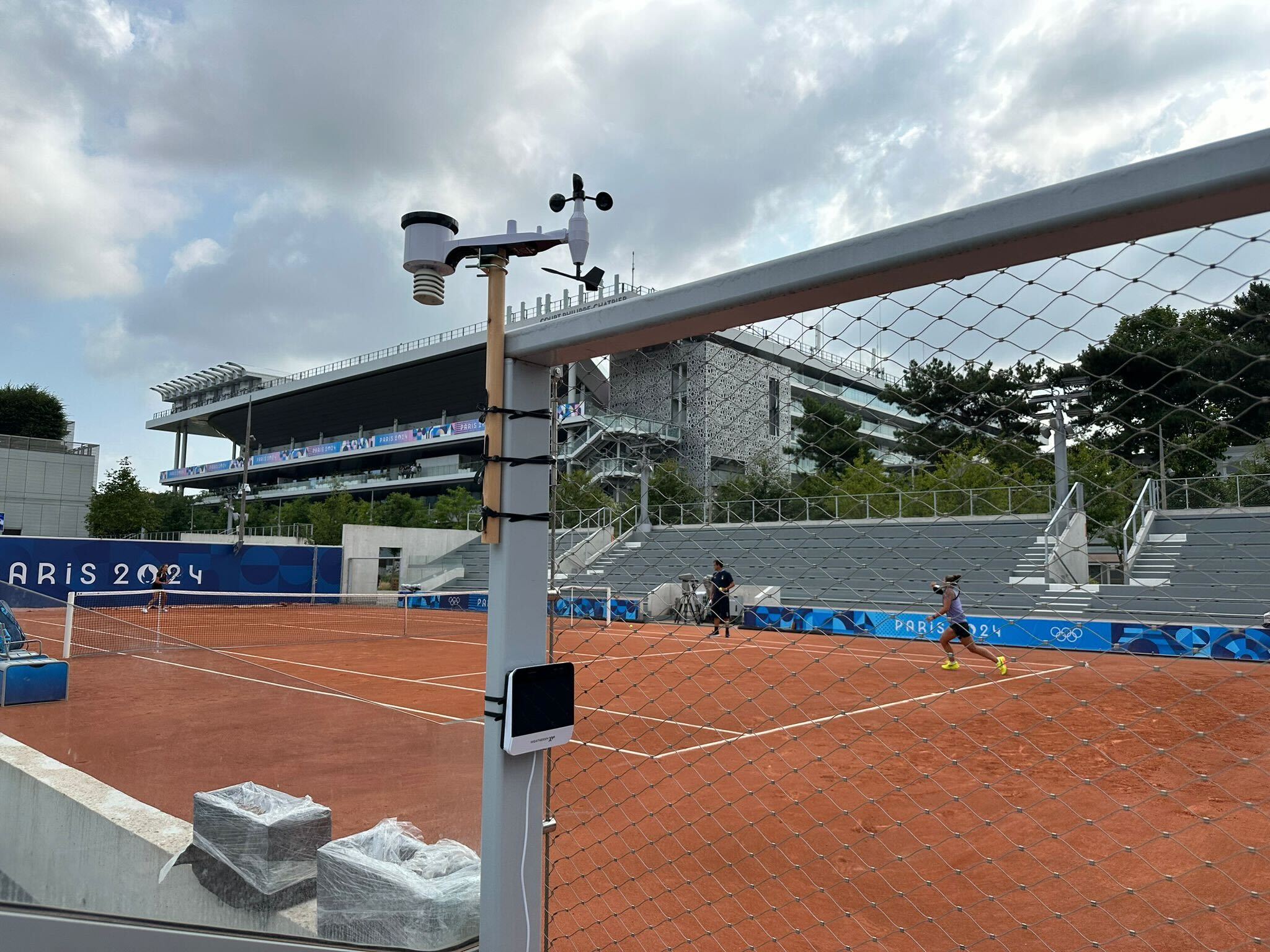
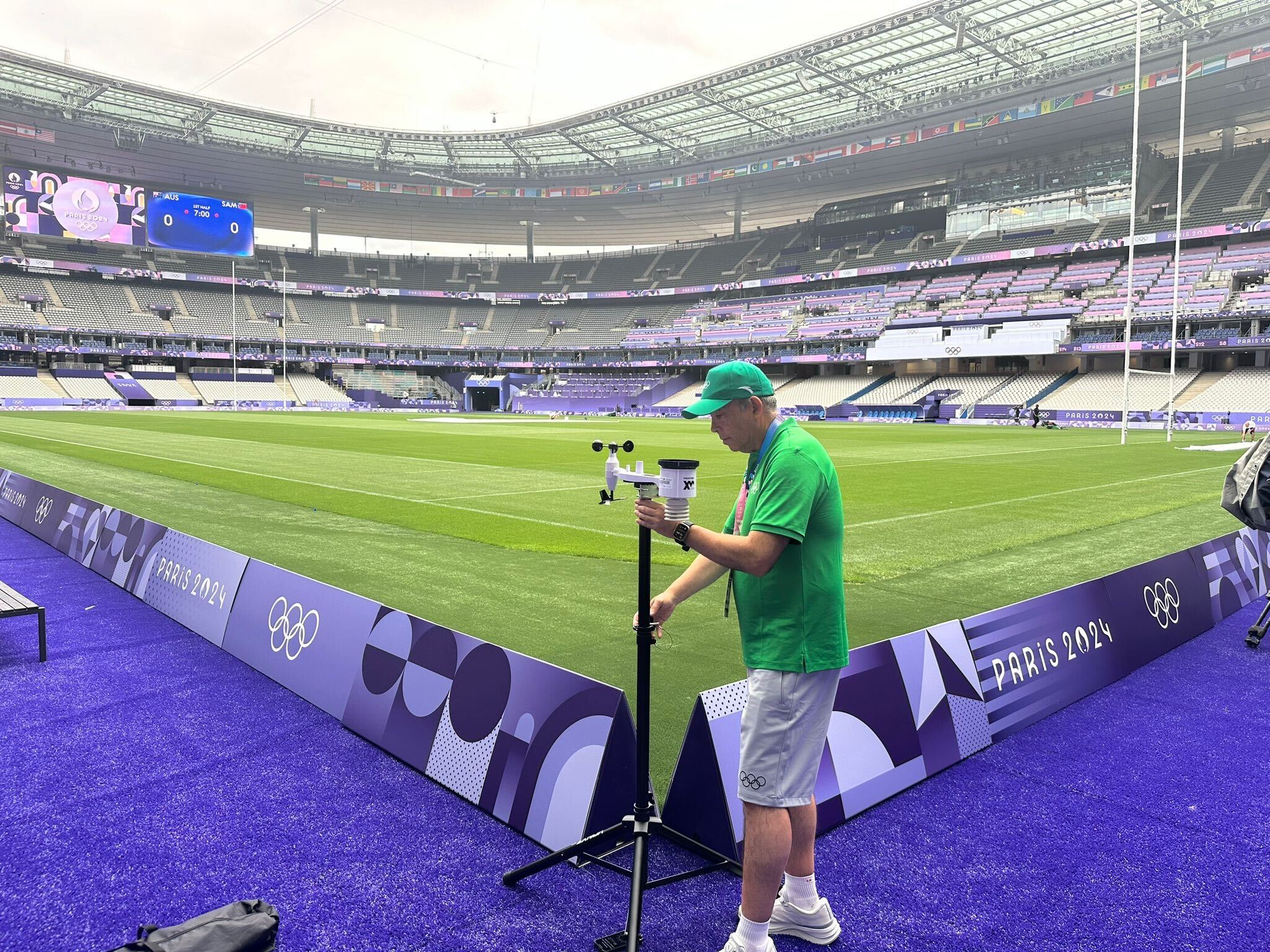
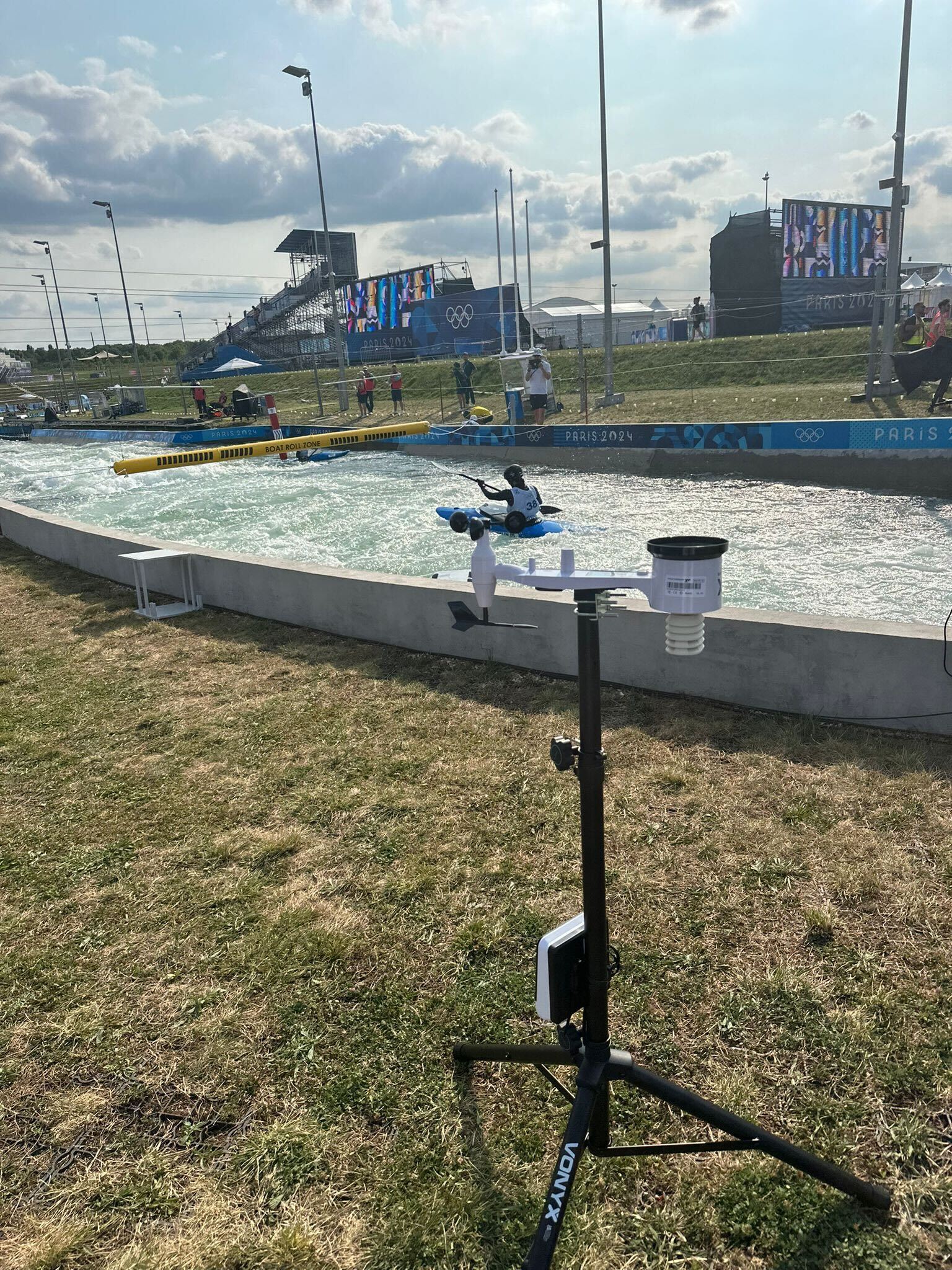
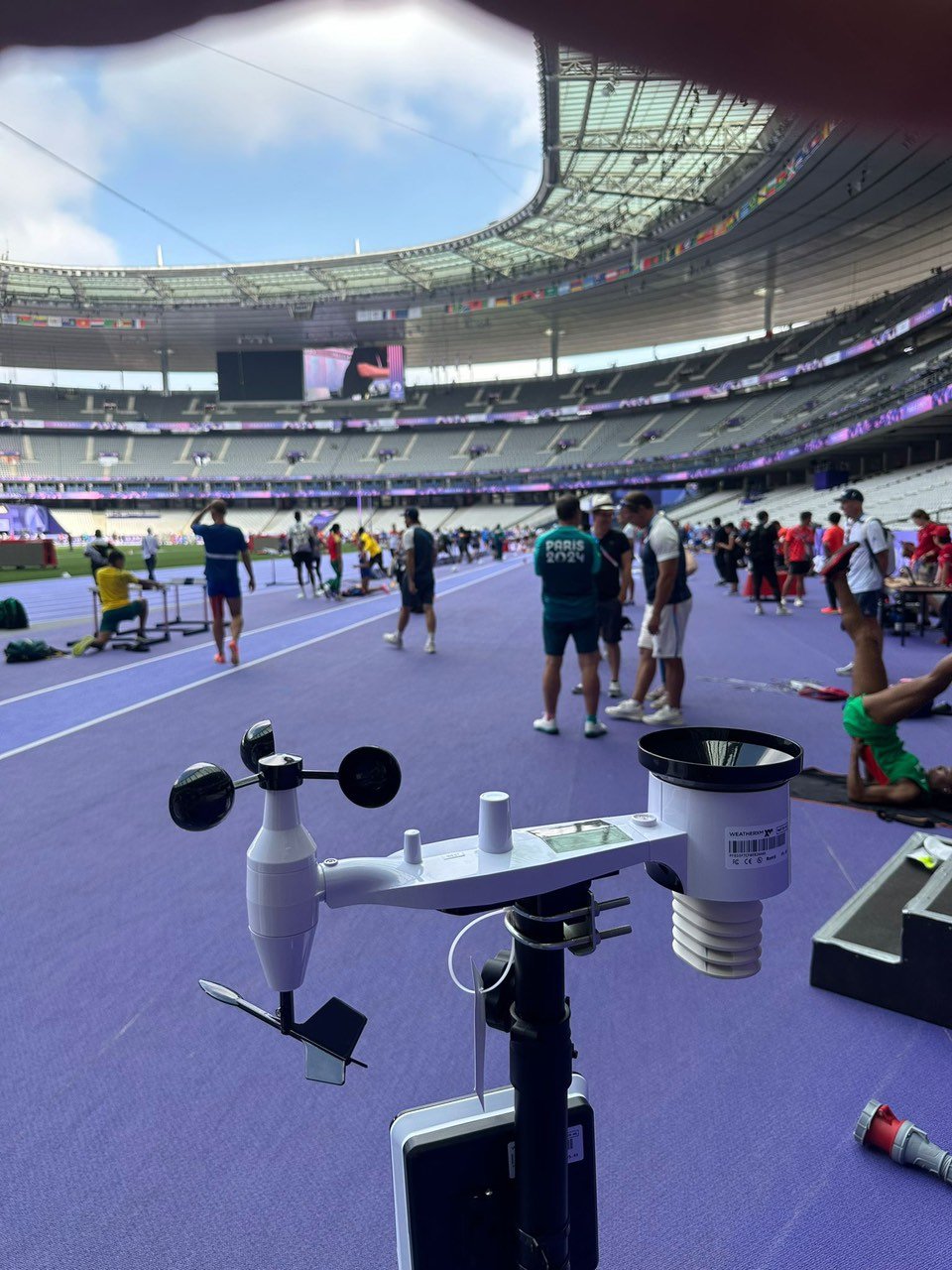
Venue environmental parameters across summer and winter
Sub-Zero Freeze Resilience
Alpine winter is one of the harshest real-world tests for sensor hardware and our stations didn't flinch. Autonomous solar and battery power maintain uninterrupted telemetry under heavy snowpack and sub-zero temperatures.
Summer Solar Load Modeling
Combining ambient dry-bulb temperature, relative humidity, wind speed, and pyranometer solar irradiance to calculate venue heat stress indices for competition safety protocols at Paris 2024.
Zero-Infrastructure Uplink
Portable cellular and LoRa-powered configurations eliminate dependence on fixed venue Wi-Fi and power infrastructure, enabling rapid installation across mountains, stadiums, and temporary venues.
Ready to monitor venue microclimates?
We deploy rapidly configurable cellular and autonomous stations for tournaments, winter championships, and venue research.